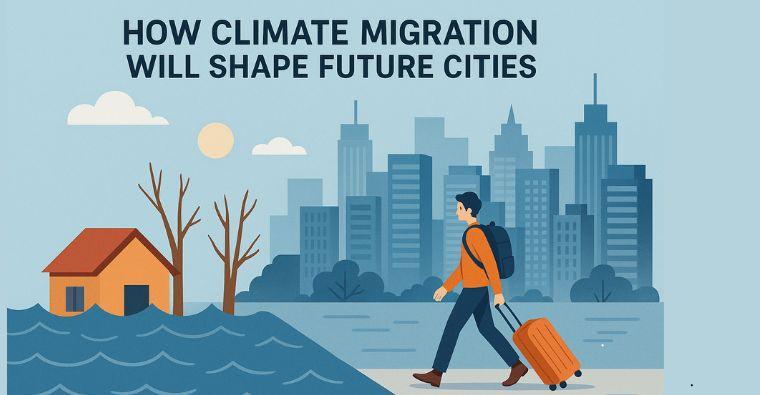
Climate change is not just melting glaciers or raising sea levels—it’s reshaping human geography. As extreme weather, droughts, floods, and rising temperatures make some regions unlivable, millions are being forced to relocate. This global trend, known as climate migration, is becoming a defining challenge for governments and city planners worldwide.
So, how will future cities absorb this shift—and are they ready?
What Is Climate Migration?
Climate migration refers to the movement of people due to environmental stressors caused by climate change. This includes:
- Sea-level rise displacing coastal communities
- Water scarcity driving rural populations into cities
- Wildfires and heatwaves forcing relocations
- Crop failure triggering economic migration
The World Bank estimates that over 200 million people could become climate migrants by 2050.
Why Cities Will Bear the Impact
Urban areas are already home to over half of the world’s population, and they’ll be the primary destinations for climate migrants. Cities offer:
- Economic opportunities
- Infrastructure (healthcare, housing, transport)
- Government support and aid systems
However, this population surge will strain existing systems unless cities adapt proactively.
Key Ways Climate Migration Will Shape Cities
1. Population Growth in Unexpected Areas
Cities once considered “secondary” or less dense may become hotspots due to climate safety—moderate temperatures, abundant water, and inland geography.
Planners will need to quickly scale infrastructure like housing, schools, and transit to accommodate new residents.
2. Affordable Housing Crisis
With rising demand, rental and housing prices in safe zones may spike. This could lead to overcrowding, displacement, or informal settlements unless inclusive housing policies are implemented.
3. Green Infrastructure Will Be Crucial
To handle both climate impacts and new populations, future cities must invest in:
- Flood-resistant roads and drainage
- Heat-resistant building materials
- Parks and green spaces to lower urban heat
- Renewable energy systems
4. Health Systems Will Need Scaling
Migrants often arrive with health needs or trauma from environmental disasters. Cities must prepare for spikes in public health demand, especially in areas vulnerable to disease outbreaks.
5. Cultural and Social Integration
An influx of new communities brings diversity—but also challenges in integration. Urban planning must include social programs, language access, and equitable services to maintain cohesion.
How Cities Can Prepare for Climate Migration
- Data-Driven Planning: Use climate and migration modeling to project future population flows.
- Flexible Zoning Laws: Allow rapid development in new residential zones.
- Invest in Resilience: Upgrade infrastructure to handle environmental stress and growth.
- Strengthen Local Governance: Empower municipalities with funds and autonomy to act quickly.
- Promote Inclusive Policies: Support both existing residents and newcomers to avoid conflict.
Global Examples of Early Action
- Rotterdam, Netherlands uses floating neighborhoods and water plazas to manage rising seas.
- Toronto, Canada is preparing for increased migration due to its mild climate and freshwater access.
- Singapore invests in vertical housing and efficient land use to maximize livability.
These examples show that forward-thinking urban design can turn a challenge into an opportunity.
Climate migration will reshape our cities—geographically, economically, and culturally. The question isn’t whether this change is coming, but how well we’ll adapt to it.
Cities that invest in sustainable infrastructure, inclusive planning, and climate resilience today will become the thriving urban centers of tomorrow.