A New Era of Energy Begins
As the world pivots toward clean energy, hydrogen technology is emerging as a game-changer—especially for countries like India, where the need to balance economic growth with sustainability is urgent.
India’s push toward a green hydrogen economy has the potential to redefine industrial operations, boost exports, create jobs, and significantly cut carbon emissions.
1. What Is Hydrogen Technology?
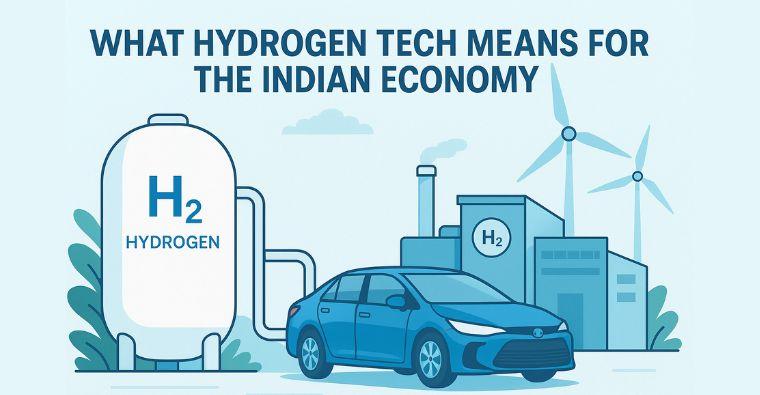
Hydrogen technology refers to using hydrogen—especially green hydrogen (produced using renewable energy)—as a clean fuel. It powers:
- Fuel cells for transportation
- Industrial processes (like steelmaking, refineries, fertilizers)
- Energy storage and grid balancing
- Power generation for remote areas
Green hydrogen emits zero carbon when produced sustainably, making it a top candidate to replace fossil fuels.
2. India’s Green Hydrogen Mission: A Bold Move
In 2023, India launched the National Green Hydrogen Mission with an investment of ₹19,744 crore (~$2.3 billion), aiming to:
- Produce 5 million metric tonnes of green hydrogen annually by 2030
- Add 125 GW of renewable energy capacity
- Generate over 600,000 jobs
- Reduce dependence on energy imports
- Cut 50 million tonnes of CO₂ emissions
This mission positions India as a global hydrogen hub, especially for exports to Europe and Asia.
3. Economic Benefits of Hydrogen Tech in India
✅ a. Job Creation Across Sectors
From engineering and manufacturing to transport and maintenance, hydrogen tech will unlock thousands of new jobs in:
- Electrolyzer production
- Solar and wind power setup
- Fuel cell R&D
- Storage and logistics infrastructure
- Plant operations and maintenance
It provides a unique opportunity for skilled and semi-skilled employment.
✅ b. Boosting Industrial Competitiveness
Industries like:
- Steel (which currently rely on coal)
- Fertilizer (urea plants use grey hydrogen from natural gas)
- Refineries and heavy transport
...can shift to green hydrogen, reducing carbon footprint and improving international competitiveness—especially as carbon border taxes become reality.
✅ c. Attracting Global Investments
Global investors and companies are looking at India as a hydrogen production and export hub, thanks to:
- Abundant solar and wind resources
- Cost-effective labor and land
- Strong government support
Early investment in this space can unlock public-private partnerships, FDI, and tech collaborations.
✅ d. Reducing Oil and Gas Imports
India imports nearly 85% of its crude oil. Transitioning industries and transport to hydrogen can:
- Reduce import bills
- Improve energy security
- Stabilize long-term macroeconomic risks
This not only strengthens the rupee but also frees up foreign exchange for development.
4. Challenges Ahead
Despite the potential, hydrogen tech faces hurdles:
- High initial production costs
- Lack of storage and pipeline infrastructure
- Electrolyzer technology dependence on imports
- Need for large-scale renewable power setups
- Water scarcity in certain regions (hydrogen production needs water)
To address this, India must invest in:
- Local electrolyzer manufacturing
- Hydrogen-ready pipelines and fueling stations
- R&D in cost-reduction and efficiency
- Water-efficient electrolysis technologies
5. Long-Term Outlook: A Green Economy Anchor
Hydrogen technology could become a $12–15 trillion global industry by 2050. For India, embracing it early means:
- Being part of global supply chains
- Exporting hydrogen and its derivatives (like ammonia)
- Becoming a clean-tech manufacturing hub
Combined with solar, wind, and EV growth, hydrogen completes the clean energy puzzle.
A Hydrogen-Powered Future
Hydrogen is more than a buzzword—it’s a catalyst for economic transformation. For India, investing in hydrogen tech is not just about meeting climate targets, but about building an energy-secure, innovation-driven, and job-rich economy.
By aligning policy, industry, and public awareness, India can lead the global hydrogen revolution.